
Gallery
Eduardo Salse
Brazil
Credits
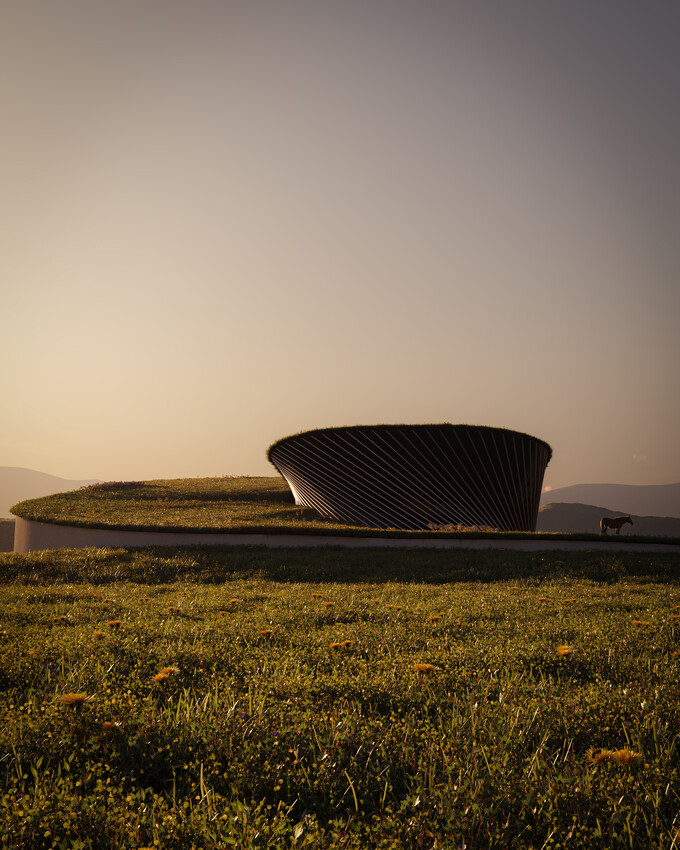
This image focuses on the sculptural clarity of the museum as it emerges quietly from the landscape. The architecture is perceived as a single, continuous gesture subtle yet expressive where the built form is almost entirely absorbed by the terrain.
The circular volume is defined by a rhythmic structural system that wraps the building in a delicate yet powerful skin. This repetition creates a strong visual identity while allowing light to softly filter through, emphasizing depth and shadow.
Here, the project explores restraint. Rather than competing with the surroundings, the architecture reinforces the horizontality of the landscape, allowing the natural topography and vegetation to remain the protagonist. The building reveals itself gradually, inviting discovery instead of imposing presence.
The warm, low-angle light enhances the tactile quality of the materials and the softness of the grass-covered roof, reinforcing a sense of calm and timelessness. The presence of a solitary animal subtly introduces scale and life, strengthening the relationship between architecture and nature.
This composition highlights the project’s core intention: to create a museum that is not only placed within the landscape, but deeply rooted in it both visually and experientially.
Notes
This image focuses on the sculptural clarity of the museum as it emerges quietly from the landscape. The architecture is perceived as a single, continuous gesture subtle yet expressive where the built form is almost entirely absorbed by the terrain.
The circular volume is defined by a rhythmic structural system that wraps the building in a delicate yet powerful skin. This repetition creates a strong visual identity while allowing light to softly filter through, emphasizing depth and shadow.
Here, the project explores restraint. Rather than competing with the surroundings, the architecture reinforces the horizontality of the landscape, allowing the natural topography and vegetation to remain the protagonist. The building reveals itself gradually, inviting discovery instead of imposing presence.
The warm, low-angle light enhances the tactile quality of the materials and the softness of the grass-covered roof, reinforcing a sense of calm and timelessness. The presence of a solitary animal subtly introduces scale and life, strengthening the relationship between architecture and nature.
This composition highlights the project’s core intention: to create a museum that is not only placed within the landscape, but deeply rooted in it both visually and experientially.